
Are your eyes watery from cold? Why it happens and how to find relief
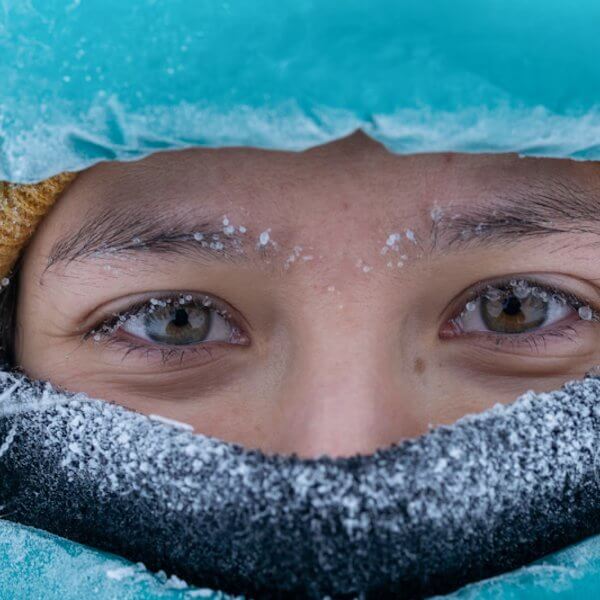
You step outside on a Toronto winter morning, turn into the wind, and your eyes begin to stream before you reach the bus stop. It can be frustrating when a short walk leaves you wiping tears from your cheeks.
Cold, dry, and windy conditions can irritate the eye surface and trigger extra tears, even when dryness is part of the cause.¹ This article focuses on cold weather; watery eyes during a respiratory cold are covered separately in the FAQs.
Understanding the difference can help you find appropriate relief. We will explain practical ways to reduce irritation, what persistent watering may mean, and which symptoms need prompt care.
Why do my eyes water in the cold?
Cold and windy conditions can dry and irritate the surface of your eyes, prompting them to produce extra tears.¹ This response is called reflex tearing. Think of it as your eyes reacting to discomfort by sending more tears across the irritated surface.
That explains why your eyes may suddenly feel very wet outdoors. However, the amount of visible tearing does not tell the whole story. Watering can happen because your eyes produce more tears, because tears cannot drain properly, or because both processes are involved.¹
An assessment helps distinguish these possibilities. Even if winter weather seems to be the obvious trigger, recurring symptoms deserve attention rather than an assumption that your eyes are simply sensitive to the cold.
Eyes watering in wind: why symptoms increase outdoors
If you notice more tearing on a windy street than on a sheltered path, evaporation may help explain the difference. Wind and dry environments can make tears evaporate more quickly, leaving the eye surface less comfortably lubricated.²
The irritation that follows can trigger additional tearing.¹ You might notice this while walking to work, waiting for a streetcar, or standing at an exposed transit stop. The setting is familiar, but the symptom does not establish a diagnosis.
Pay attention to when the watering starts and whether it settles after you go indoors. You could keep a brief note of these patterns to help describe them at your appointment. Sharing those details with your Optometrist gives useful context, especially if the same pattern keeps returning throughout the winter. You can get in touch with us for a consultation, discuss your questions and more.

Dry eyes in winter: why your eyes can still water
It can seem confusing to hear that dry eyes may explain tears running down your face. Yet dry eye involves the quality and stability of the tear film as well as how much tear fluid your eyes produce.³
The tear film is the thin coating that keeps the eye surface lubricated. When it does not work well, the surface can become irritated, and extra watering can follow.³ Having plenty of visible tears therefore does not necessarily mean your eyes have consistent, comfortable lubrication.
Indoor heating can also lower relative humidity, adding to the challenge of dry winter air.⁴ Using a humidifier may help make dry indoor environments more comfortable.⁵
Tell your Optometrist if watering comes with burning or a gritty feeling. These symptoms can accompany dry eye, but an examination is needed to understand what is happening in your particular case.³
How to stop your eyes from watering in cold weather
Reducing wind exposure and dryness may ease watering when irritation is the trigger. The right approach depends on the cause, so consider these measures a starting point rather than a guaranteed solution.
Wraparound sunglasses can help shield your eyes from outdoor wind.⁶ They are worth considering for everyday winter activities, including your commute and walks around the neighbourhood. Choose a comfortable fit that you can wear consistently when conditions are windy.
Indoors, a humidifier can help keep the air from becoming too dry.⁶ You can also reduce direct airflow towards your face by adjusting heating vents or moving away from a fan. Avoiding air blowing into your eyes is one practical way to limit drying exposure.³
Lubricating eye drops, also called artificial tears, may help when dryness is responsible for the irritation.⁵ Adding drops to already watery eyes may sound counterintuitive, but the aim is to address the uncomfortable surface that is triggering extra tears. Ask your Optometrist which drops suit your symptoms and how to use them appropriately.
If these changes do not help, or watering keeps returning, arrange an assessment. Trying different measures indefinitely can leave the actual cause unaddressed. Bring a description of what you have already tried so your Optometrist can discuss the next step with you.

Other watery eye causes to consider
Cold weather may make symptoms more noticeable without explaining everything. Allergies, eyelid inflammation called blepharitis, changes in eyelid position, and blocked tear ducts can also contribute to watering.⁷
Tear ducts carry tears away from the eyes; they do not produce them. If that drainage pathway becomes blocked, tears may build up and spill over. Changes in eyelid position can also interfere with normal drainage or irritate the eye surface.⁷
These causes need different approaches, even when the main complaint sounds similar. Mention itching, eyelid discomfort, or watering that continues indoors during your appointment. Those details help your Optometrist assess the broader picture without relying on the weather alone.

Watery eyes treatment: When to see an Optometrist in Toronto
If watering keeps returning, persists indoors, or interferes with daily activities, book an appointment with an Optometrist. Repeatedly stopping during a walk to clear your eyes is a reasonable concern to bring to an examination.
Your assessment may include questions about symptom triggers, when the watering began, and whether one or both eyes are affected. Depending on the findings, your Optometrist may examine tear production, how quickly tears evaporate, and the structure of your eyelids.⁶
You do not need to arrive knowing which condition you have. Describe what you experience in your own words, including whether symptoms change between home, work, and outdoors. Explain how the watering affects your routine and whether you have noticed other discomfort.
Watery eyes treatment depends on the underlying cause. Caring for a dry, irritated eye surface differs from treatment for an obstructed drainage pathway. Your Optometrist may recommend referral to an Ophthalmologist when further investigation or specialist treatment is appropriate.¹ The examination helps determine which treatments make sense for you based on conditions.
When watery eyes need urgent assessment
Prompt medical assessment is needed when there is eye pain, vision changes, or a persistent feeling that something is in your eye.⁷ Do not assume that these symptoms are simply part of winter dryness.
Light sensitivity and intense redness are additional reasons to seek care promptly.⁸ When contacting a healthcare provider, explain these associated symptoms clearly so the urgency can be assessed. Saying only that your eyes are watery may leave out the most relevant information.
Sudden loss of vision requires immediate emergency assessment.⁹ Severe eye pain also calls for immediate emergency care.¹⁰ Do not wait for a routine online appointment request to be reviewed or confirmed. Seek emergency assessment straight away, even if the watery eyes started during an ordinary walk outdoors.
Book an eye exam with Kodak Lens Vision Centres
Persistent watery eyes can make winter outings uncomfortable. Kodak Lens Vision Centres welcomes people across Toronto and the Greater Toronto Area for an assessment of their eye health and symptoms.
Request an eye exam appointment to discuss your concerns with our Optometrist. Urgent symptoms need prompt medical care rather than waiting. Visit us and book today.
Frequently asked questions
Winter watering can raise a few questions, especially when it affects only one eye or happens while you are feeling unwell. Here are some common questions you may want to discuss with your Optometrist.
Why is only one eye watering?
Watering in one eye can have several causes, including local irritation or difficulty draining tears; the symptom alone cannot establish the cause.⁹ It is understandable to wonder why one eye reacts differently, but that difference does not identify a particular condition.
Arrange an assessment if the watering persists. Mention whether it occurs only outdoors or continues throughout the day. Associated pain, redness or vision changes affect how urgently you need care, so report them when seeking advice.⁷
Why do my eyes water when I have a cold?
A common cold can be associated with watery eyes, and viral conjunctivitis can occur alongside a respiratory infection.¹¹ This is different from tearing that starts when you step into cold outdoor air.
Conjunctivitis is inflammation of the thin tissue covering the white part of the eye and lining the eyelids.¹¹ Watery eyes during an illness do not automatically mean you have conjunctivitis. Tell your healthcare provider about accompanying symptoms and whether the eye discomfort is improving or getting worse.
Watery eyes: cold or allergies?
Watering alone cannot reliably distinguish a respiratory cold from allergies because the symptoms can overlap. Pronounced itching and symptoms in both eyes can accompany allergic conjunctivitis, while viral conjunctivitis may occur with a respiratory infection.¹¹
These are useful details to discuss during an assessment, rather than a checklist for diagnosing yourself. If you are unsure what is causing recurring watering, an eye examination can help clarify the next step. Pain, vision changes, light sensitivity, or intense redness still require prompt care by seeking advice from an Optometrist as soon as possible.⁸
References
- 2025, Watery Eyes, Merck Manual Consumer Version: https://www.merckmanuals.com/home/eye-disorders/symptoms-of-eye-disorders/watery-eyes
- 2024, Causes of Dry Eye, National Eye Institute: https://www.nei.nih.gov/eye-health-information/eye-conditions-and-diseases/dry-eye/causes-dry-eye
- 2022, Dry eyes: Symptoms and causes, Mayo Clinic: https://www.mayoclinic.org/diseases-conditions/dry-eyes/symptoms-causes/syc-20371863
- 2024, How Cold Winter Weather Affects the Eyes, University of Colorado Anschutz: https://news.cuanschutz.edu/ophthalmology/how-cold-winter-weather-affects-the-eyes
- 2022, Dry eyes: Diagnosis and treatment, Mayo Clinic: https://www.mayoclinic.org/diseases-conditions/dry-eyes/diagnosis-treatment/drc-20371869
- 2025, Dry Eye, National Eye Institute: https://www.nei.nih.gov/eye-health-information/eye-conditions-and-diseases/dry-eye
- 2024, Watery eyes, Mayo Clinic: https://www.mayoclinic.org/symptoms/watery-eyes/basics/causes/sym-20050821
- 2024, How to Treat Pink Eye, Centers for Disease Control and Prevention: https://www.cdc.gov/conjunctivitis/treatment/index.html
- 2022, Epiphora (Watery Eyes), Cleveland Clinic: https://my.clevelandclinic.org/health/diseases/17944-epiphora-watery-eyes
- 2025, Eye pain, MedlinePlus Medical Encyclopedia: https://www.medlineplus.gov/ency/article/003032.htm
- 2024, Symptoms of Pink Eye, Centers for Disease Control and Prevention: https://www.cdc.gov/conjunctivitis/signs-symptoms/index.html