Eye exams for seniors: What to expect, when to book, and how OHIP helps
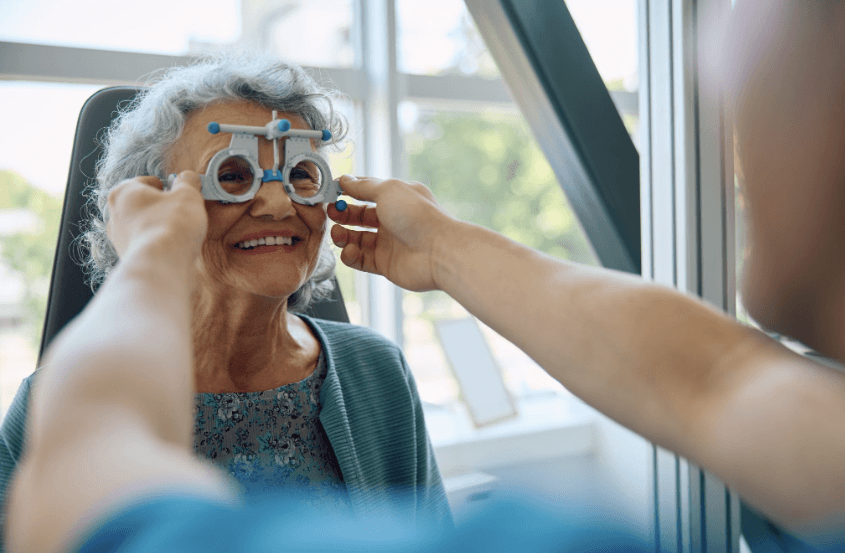
This guide explains senior eye exams, warning signs and Ontario coverage. Kodak Lens Vision Centres provides eye care for seniors to help you understand your vision and care options.
Seniors’ eye care: Why regular exams matter
- Cataracts cloud the lens; glaucoma damages the optic nerve
- Age-related macular degeneration affects central vision
- Diabetic retinopathy damages retinal blood vessels
These diseases and disorders can be common after a certain age, but they certainly do not affect every senior.¹ That is why regular check-ups are crucial, they support timely decisions, even if they can’t guarantee prevention or recovery of lost vision.
Our own Dr. Linda Tse recalls examining a patient whose persistent headaches had prevented sleep for a week. He had previously sought medical and emergency care but didn’t receive an answer. Her examination revealed papilledema (swelling at the optic nerve head) and directed him back to the emergency department for neurological assessment. According to Dr. Tse, her timely discovery made all the difference; he improved after treatment and continues travelling from Toronto’s west end for yearly visits, always expressing his gratitude.
This experience is a constant reminder for us of how attentive vision care can contribute to our patient’s broader health and wellbeing and how important it is to book eye exams regularly.

How often should seniors get an eye exam?
OHIP’s 18 month funding interval is not a universal recommendation to wait that long. Contact us about new symptoms rather than waiting for your next routine eye exam.
Are annual eye checkups for seniors really necessary?
Top eye exams for seniors: What your Optometrist may check
These are assessments within comprehensive care that your optometrist might suggest, depending on your situation:
- Visual acuity and prescription assessment check clarity and whether corrective lenses need updating.
- Glaucoma assessment considers eye pressure and the optic nerve, with peripheral vision testing when indicated. Pressure alone cannot establish or exclude glaucoma.²
- Cataract assessment checks vision and examines the lens for clouding.
- Retinal exams assess the back of the eye for macular degeneration and diabetic eye complications. Dilation improves the view of internal structures.³
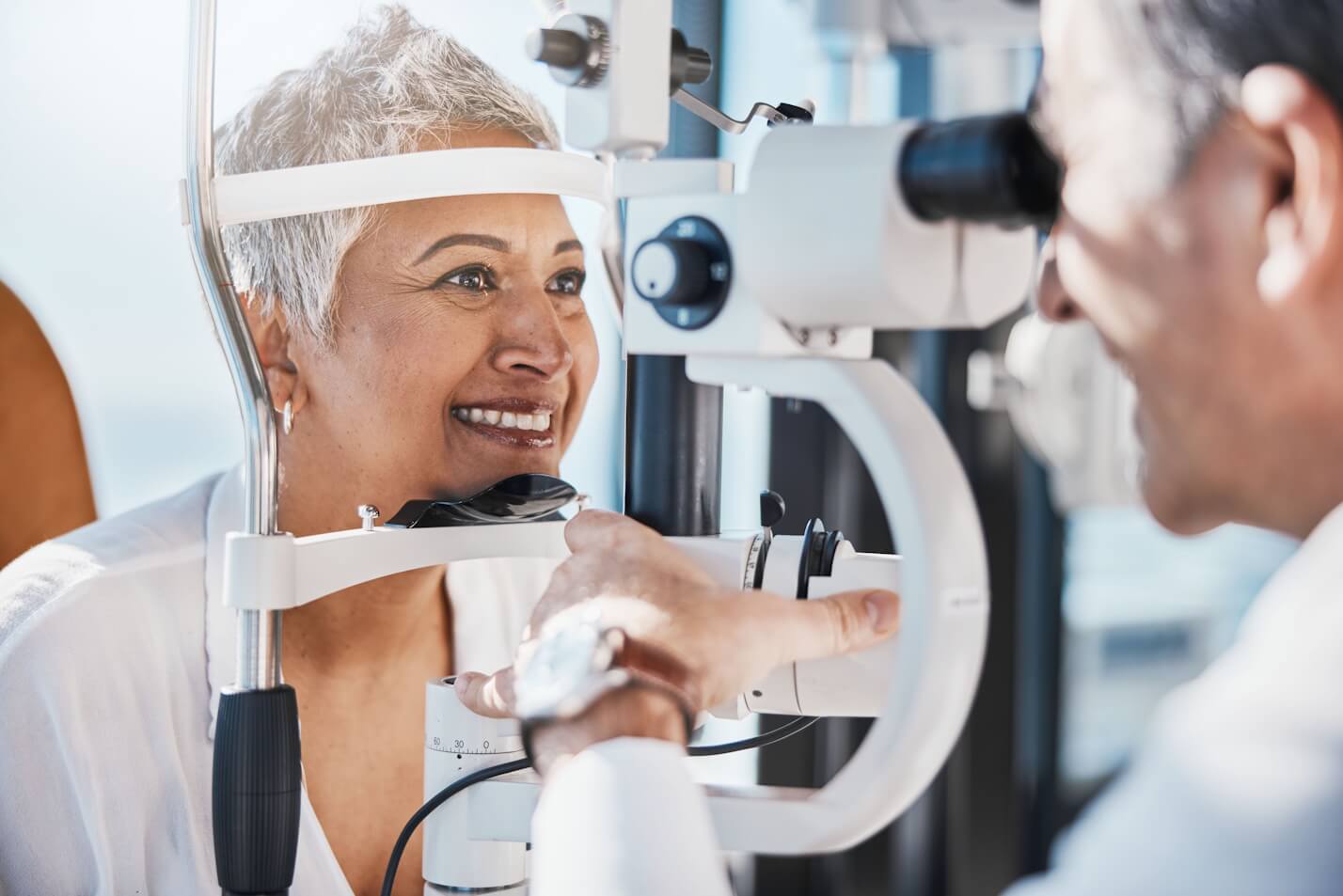
A slit lamp, a microscope with a bright light, helps examine eye structures. Further testing depends on findings, rather than a fixed package covered universally by OHIP.
What happens during an eye exam?
At arrival, discuss symptoms, medications, family history and previous care, including laser eye surgery or concerns about post-eye-surgery health. Mention diabetes, high blood pressure, cardiovascular disease and other health issues if applicable.
During assessment, your comprehensive oculo-visual assessment may include pupil responses, eye movements and other aspects of the visual system. Discuss longstanding lazy eye, digital eye strain, or dry or irritated eyes. When indicated, assessment of tear production and tear quality helps investigate dry eye disease.
Dilation eye drops also known as Mydriacyl (tropicamide) is a prescription eye drop used to widen (dilate) the pupil and temporarily relax the eye’s focusing muscles so your Optometrist can examine the retina and optic nerve. Afterwards, you can discuss findings, any prescription change, monitoring, treatment or referral.
Bring current glasses, your medication list, health card and relevant records. Keep in mind that dilation can temporarily blur vision and increase light sensitivity. Bring sunglasses and arrange a ride home.³
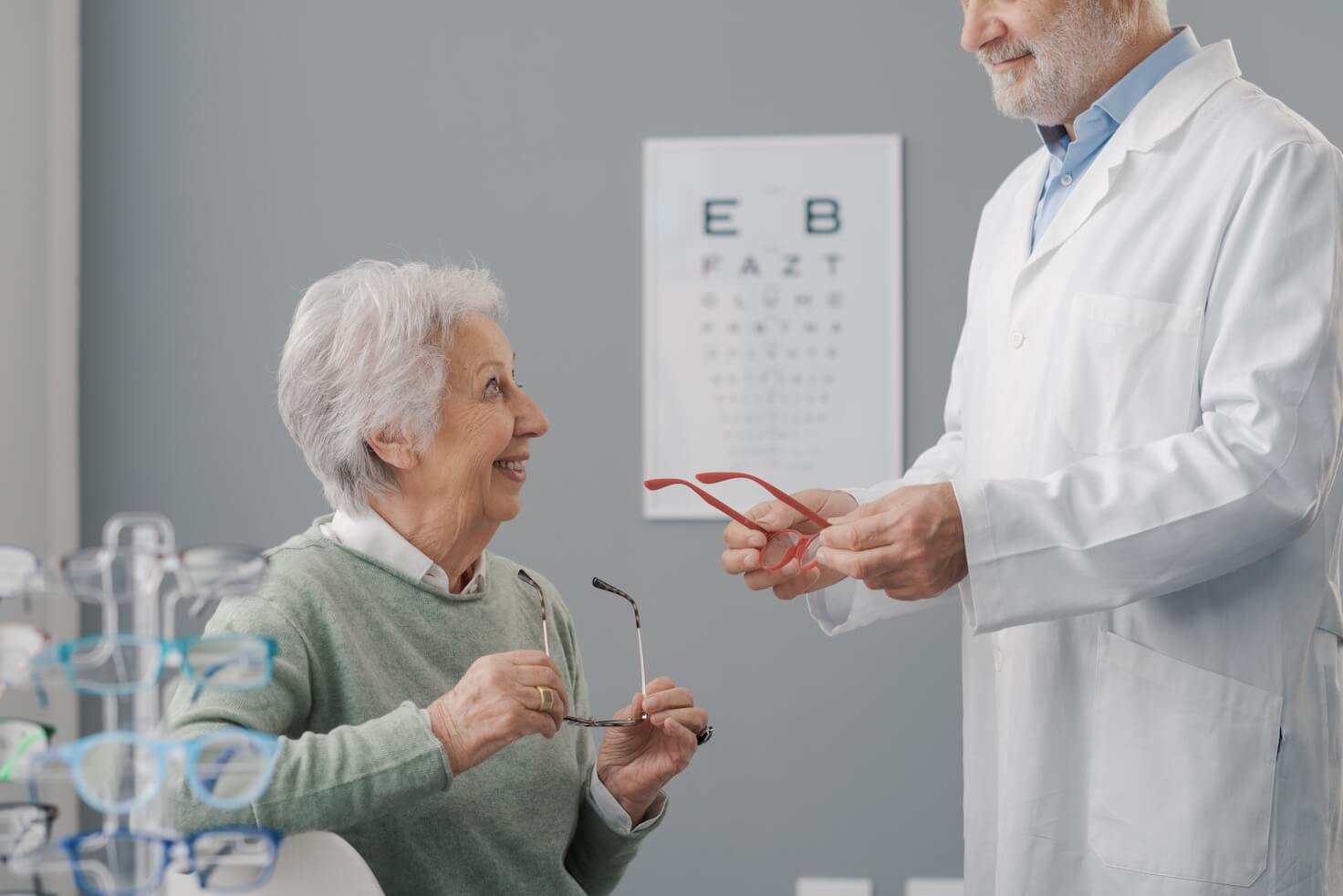
Signs that you need an eye exam as a senior
- Cloudy vision
- Worsening night vision
- Glare
- Halos
- Faded colours
- Frequent changes to prescription eyeglasses
All of these warrant assessment but they do not establish a diagnosis, and should not automatically be dismissed as ageing.¹ However, symptoms are not always present. Our own Dr. Jessica Tran recalls finding a superior retinal detachment in a senior who had no symptoms. She referred him to the on-call team at Toronto Western Hospital, where he was assessed and treated that day. Her account demonstrates the practical value of examining eye health beyond the glasses prescription.
Noticing any of these changes? Request an eye exam with Kodak Lens Vision Centres to understand what may be affecting your vision.
Warning signs that need urgent assessment
Beyond the possible common symptoms, some changes require immediate attention: a sudden increase in floaters, flashes of light or a curtain-like shadow can indicate retinal detachment. Seek immediate assessment from an eye care professional or an emergency department. Do not wait for routine booking or renewed OHIP eligibility.5
OHIP seniors eye exam: Which services are covered?
However, OHIP does not pay for eyeglasses or contact lenses. Enhanced intraocular lenses and services intended to reduce dependence on glasses can be uninsured, including alongside insured cataract surgery.⁷ We recommend you confirm coverage and fees for additional services, including imaging, before proceeding.
Optical coverage through private health insurance depends on your policy. Check vision coverage separately from OHIP.
OHIP eye exam schedule for seniors
Funding intervals depend on qualifying medical eligibility.6
| Eligibility at 65 or older | Insured major exam interval | Minor follow-up assessments |
| No qualifying medical condition | Every 18 months | Up to two within the applicable period after the major exam |
| At least one qualifying medical condition | Every 12 months | Up to two within the applicable period after the major exam |
These are funding rules, not instructions to delay necessary care. Ask the clinic to confirm your last insured examination date and eligibility. The Ontario Association of Optometrists recommends visits according to your Optometrist’s advice.8
Medical conditions that qualify for annual OHIP exams
Eligibility requires specific criteria, rather than a diagnosis name alone. Categories include:9
- Diabetes mellitus.
- Glaucoma requiring or previously treated with medication, eligible laser treatments or surgery; prophylactic laser peripheral iridotomy is excluded.
- Cataracts or posterior capsular opacification, clouding behind an implanted lens, with 20/40 or worse vision in the best corrected eye, or a surgery referral.
- Acute or chronically progressive retinal, corneal or optic pathway disease.
- Uveitis, inflammation inside the eye, during active episodes.
- Acquired cranial nerve palsy causing strabismus, eye misalignment, during the acute phase or until resolution or stabilization.
- Ocular toxicity screening for hydroxychloroquine, chloroquine, ethambutol or tamoxifen.
Suspected glaucoma or mild cataracts do not automatically qualify. Have the clinic confirm eligibility.
Book your next senior eye exam with Kodak Lens Vision Centres
In Toronto and the Greater Toronto Area, we invite you to book an appointment with Kodak Lens Vision Centres and ask about OHIP eligibility. For emergency symptoms, seek immediate assessment.
Frequently asked questions for seniors’ eye care
Here are answers to common questions about senior eye exams and OHIP coverage.
Are there free exams for seniors?
Yes, eligible seniors receive OHIP-insured examinations without paying for the insured service, subject to the intervals above. Additional visits or services may carry fees.⁶
Are there free glasses for seniors?
No, OHIP does not provide free glasses based on age.7 Optical assistance for seniors may be available through separate programs. Ontario Works may help eligible social assistance recipients with eyewear; confirm eligibility and approved costs with your caseworker before purchasing.¹⁰
If you receive income or disability assistance, ask your caseworker about eyewear benefits, required approvals and how the ministry’s maximum rate affects eligible costs under your particular assistance program.¹¹
What does OHIP cover for senior eye care?
OHIP covers eligible major examinations and limited minor follow-up assessments.⁷ Glasses, contact lenses and some additional services are excluded. Confirm proposed services and fees beforehand.⁷
References
- 2025, The eye exam, Canadian Association of Optometrists: https://opto.ca/eye-health-library/eye-exam
- 2024, Glaucoma: Keep vision in your future, National Eye Institute: https://www.nei.nih.gov/sites/default/files/2024-01/NEI-GlaucomaToolkit-English.v4_508.pdf
- 2025, Get a dilated eye exam, National Eye Institute: https://www.nei.nih.gov/eye-health-information/healthy-vision/finding-eye-doctor/get-dilated-eye-exam
- 2025, Dry eye, National Eye Institute: https://www.nei.nih.gov/eye-health-information/eye-conditions-and-diseases/dry-eye
- 2025, Retinal detachment, National Eye Institute: https://www.nei.nih.gov/eye-health-information/eye-conditions-and-diseases/retinal-detachment
- 2023, Bulletin 230902: Changes to OHIP insured optometry services, Ontario Ministry of Health: https://www.ontario.ca/document/ohip-infobulletins-2023/bulletin-230902-changes-ohip-insured-optometry-services
- n.d., What OHIP covers, Government of Ontario: https://www.ontario.ca/page/what-ohip-covers
- 2026, Vision Health Month: OAO urges Ontarians to prioritize eye health, Ontario Association of Optometrists: https://optom.on.ca/news/vision-health-month-oao-urges-ontarians-to-prioritize-eye-health
- 2024, Schedule of benefits for optometry services, Ontario Ministry of Health: https://www.ontario.ca/files/2024-01/moh-ohip-schedule-of-benefits-optometry-services-2024-01-24.pdf
- n.d., Ontario Works health-related benefits, Government of Ontario: https://www.ontario.ca/page/ontario-works-health-related-benefits
- n.d., 9.14: Vision care benefits, Government of Ontario: https://www.ontario.ca/document/ontario-disability-support-program-policy-directives-income-support/914-vision-care

We’re Moving! Important Update from Kodak Lens Toronto Eyecare
KODAK Lens Toronto Eyecare is Moving to the Atrium! We have exciting news! Kodak Lens Toronto Eyecare is moving to The Atrium on Bay. As of October 26, 2026 we will be operating out of Bay Dundas Optometry until our Grand Opening of our new location in The Atrium on...

Eyeglasses vs. contact lenses: Which vision solution is right for you?
Eyeglasses vs. contact lenses: Which vision solution is right for you? Finding the appropriate option for visual correction plays a critical role in supporting individual daily routines, visual needs, and overall comfort.1 The initial step in determining the proper...
Optometry Website Design by Nomadic Advertising
eyetrusteyecare.ca is managed and operated by EyeTrust.ca Corporation
