
Eyeglasses vs. contact lenses: Which vision solution is right for you?
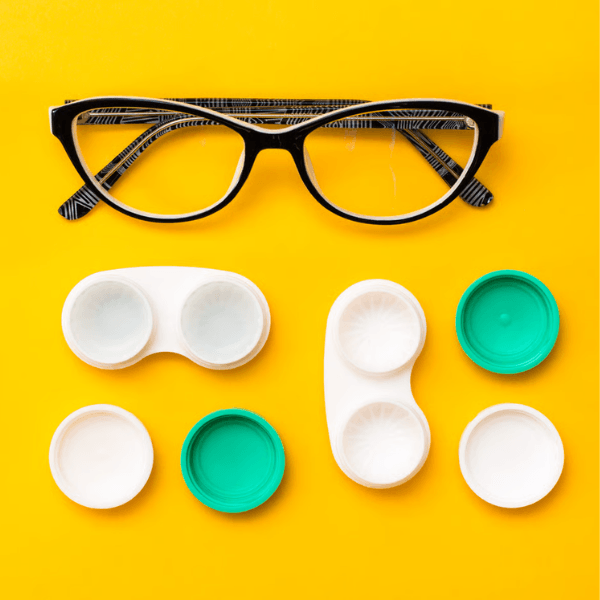
Finding the appropriate option for visual correction plays a critical role in supporting individual daily routines, visual needs, and overall comfort.1 The initial step in determining the proper pathway is scheduling a comprehensive eye exam with an Optometrist.2 During this examination, patients discover their precise prescription strength or evaluate an existing one to establish whether their refractive correction remains stable or requires an update. Both prescription glasses and contacts provide exceptional visual clarity, yet each offers distinct operational advantages and considerations. This guide compares expenses, medical safety, daily comfort, relative benefits, and prescription differences to help patients make an informed choice.
Kodak Lens Vision Centres welcomes patients across Toronto and the Greater Toronto Area to experience personalized clinical care tailored to their visual health.
Eyeglasses pros and cons: Everything you need to know
Prescription glasses remain a reliable, time-tested approach to addressing refractive errors across all age groups.3
Benefits of prescription glasses
Eyeglasses require minimal maintenance, as they eliminate the need for specialized storage cases or contact solution rinsing protocols.4 Because they do not come into contact with the ocular surface, glasses significantly diminish the likelihood of developing an eye infection, such as microbial keratitis. From an economic perspective, designer frames or a solid frame paired with durable single-vision glasses, bifocal lenses, or progressive lenses are cost-effective over time because a single pair lasts for years unless a prescription change occurs.
Eyeglasses serve as a physical barrier against environmental debris, wind, dust, and seasonal allergies. Modern lens technologies can also be customized with a blue light filter or blue-light filtering coating to ease eye strain during screen time, as well as an anti-glare coating, UV protection, or photochromic lenses that adapt to changing UV light. Additionally, unique frame designs allow individuals to treat their corrective eyewear as a distinct aesthetic fashion accessory.
Cons of prescription glasses
Peripheral vision may experience mild visual distortions or frame edge obstructions depending on the size and shape of the chosen frame. Lenses can also fog up rapidly when transitioning between fluctuating temperatures, high humidity, or while wearing protective face coverings. Furthermore, heavier frame styles may exert light pressure on the nasal bridge or ears and can slip during rigorous physical activity.
Contact lenses pros and cons: Is the switch worth it?
Benefits of contact lenses
Contact lenses align with the natural curvature of the eye, delivering an unobstructed field of view with full peripheral vision and zero frame boundaries. They are exceptionally practical for sports, active lifestyles, and outdoor recreation because they remain securely in place. Unlike traditional lenses, contacts never collect rain spots or fog up in humid environments. They also maintain your natural facial appearance without clashing with clothing or personal style choices.
Cons of contact lenses
Maintaining contact lenses demands strict hygiene protocols during insertion, removal, and daily care to lower the risk of corneal bacterial transfer. Contact lens wear can occasionally disrupt the tear film, aggravating dry eye syndrome or triggering temporary ocular discomfort. The ongoing requirement to purchase replacement lenses, multipurpose cleaning solutions, and storage cases yields a higher long-term replacement cost compared to traditional eyewear.

Are contacts cheaper than glasses? A cost breakdown
Eyeglasses typically present a higher initial entry cost due to upfront frame selection and possible customization needs (like high index lenses, Trivex lenses, etc.), but they are replaced only every one to three years.3 Conversely, contact lenses involve recurring operational expenses such as replacement supplies.
|
Cost Category |
Prescription Eyeglasses |
Contact Lenses |
|
Initial Investment |
Higher (Frame + Specialized Lenses) |
Lower (Initial Box Purchase) |
|
Ongoing Expenses |
Minimal (Microfiber Cloths/Cleaners) |
High (Disposable Lenses + Contact Solution) |
|
Replacement Frequency |
Every 1–3 Years (as needed) |
Daily, Bi-weekly, or Monthly |
|
Long-Term Cost Profile |
Lower Overall Accumulation |
Higher Cumulative Expenditure |
At Kodak Lens Vision Centres, our experienced team assists patients in navigating their vision insurance and health benefits if applicable (such as OHIP), ensuring coverage is applied effectively toward prescription glasses, disposable lenses, or dedicated contact lens exams.
Safety and eye health: Are contact lenses safe or bad for your eyes?
Contact lenses are safe medical devices when properly fitted by an Optometrist and maintained with consistent hygiene protocols.2
While contacts are not inherently damaging to the visual system, misuse (such as sleeping while wearing extended-wear lenses without clinical approval, wearing lenses past expiration, or neglecting handwashing) can cause corneal abrasions or severe infections like keratitis. To maintain optimal corneal health, patients should always wash and thoroughly dry their hands before touching the eye, discard disposable contacts on schedule, avoid exposing lenses to tap water, and keep a backup pair of glasses available.
Comfort check: Do contact lenses hurt?
Properly fitted contact lenses do not hurt; most patients adapt quickly and barely feel the presence of the lens once it rests on the tear film.1
First-time wearers usually experience a brief adjustment period lasting from a few days to a week as the eye adapts to foreign object sensation. To support optimal comfort, an Optometrist at Kodak Lens Vision Centres performs a professional contact lens fitting to evaluate tear coverage and physical lens movement across the cornea. If sudden discomfort occurs, common triggers include trapped dust, a torn lens edge, dry eyes, or an improper fit. Sudden pain, redness, or blurry central vision warrants immediate consultation with an eye care professional.
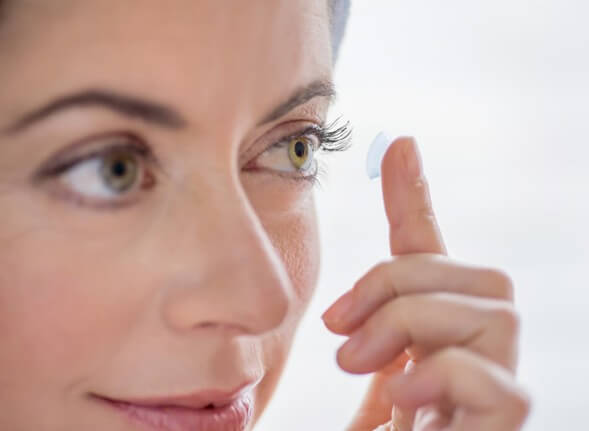
Understanding your prescription: Are contacts and glasses prescriptions the same?
Contact lens prescriptions and eyeglasses prescriptions are not the same, as they require entirely different measurement parameters.4
Eyeglasses sit approximately 12 millimeters away from the corneal surface on the face (a measurement known as vertex distance), whereas contact lenses rest directly against the eye. This distance variance alters the required refractive strength of the corrective lens.
Contact lens prescriptions include specialized physical parameters not found on standard eyeglass documents:
- Base Curve (BC) to match the curvature of the cornea
- Diameter (DIA) to ensure proper corneal coverage
- Specific brand, material, and lens design specifications (such as toric lenses for astigmatism, monovision contact lenses, multifocal lenses, scleral lenses, or rigid gas permeable options, etc.)
These technical requirements make a dedicated contact lens exam and fitting essential.
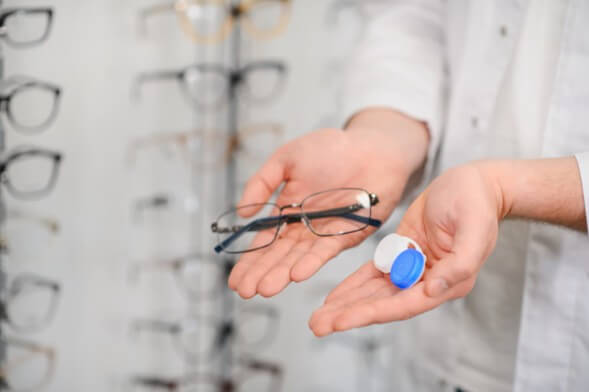
How to choose between glasses, contacts, or a combination of both
Selecting the ideal vision solution involves evaluating professional environment demands, outdoor activity levels, and underlying eye conditions such as dry eye syndrome. For many individuals, combining both options offers the most versatile approach: using daily disposable lenses for sports, fitness, or social gatherings, while relying on prescription glasses to manage digital screens, computer vision syndrome, and evening relaxation at home.
Book your eye exam at Kodak Lens Vision Centres
Schedule an appointment at your local Kodak Lens Vision Centre in Toronto and the Greater Toronto Area for a comprehensive eye exam, prescription update, or specialized contact lens fitting. Our experienced Optometrists are ready to guide you toward the ideal visual correction strategy tailored to your lifestyle and long-term ocular health. We also have a wide variety of eyewear and contact lens options for patients to choose from. Find everything you need in one convenient place!
1) 2024, Contacts vs. Glasses, WebMD: https://www.webmd.com/eye-health/contacts-or-glasses
2) 2026, Contact Lenses for Vision Correction, American Academy of Ophthalmology: https://www.aao.org/eye-health/glasses-contacts/contact-lens-102
3) 2023, How to Decide Between Contacts and Glasses: A Guide, NVISION Eye Centers: https://www.nvisioncenters.com/contacts/vs-glasses/
4) 2024, Glasses & Contacts, American Academy of Ophthalmology: https://www.aao.org/eye-health/glasses-contacts-list