
What are Eye Floaters? Can Floaters Go Away? Our Optometrist Answers!
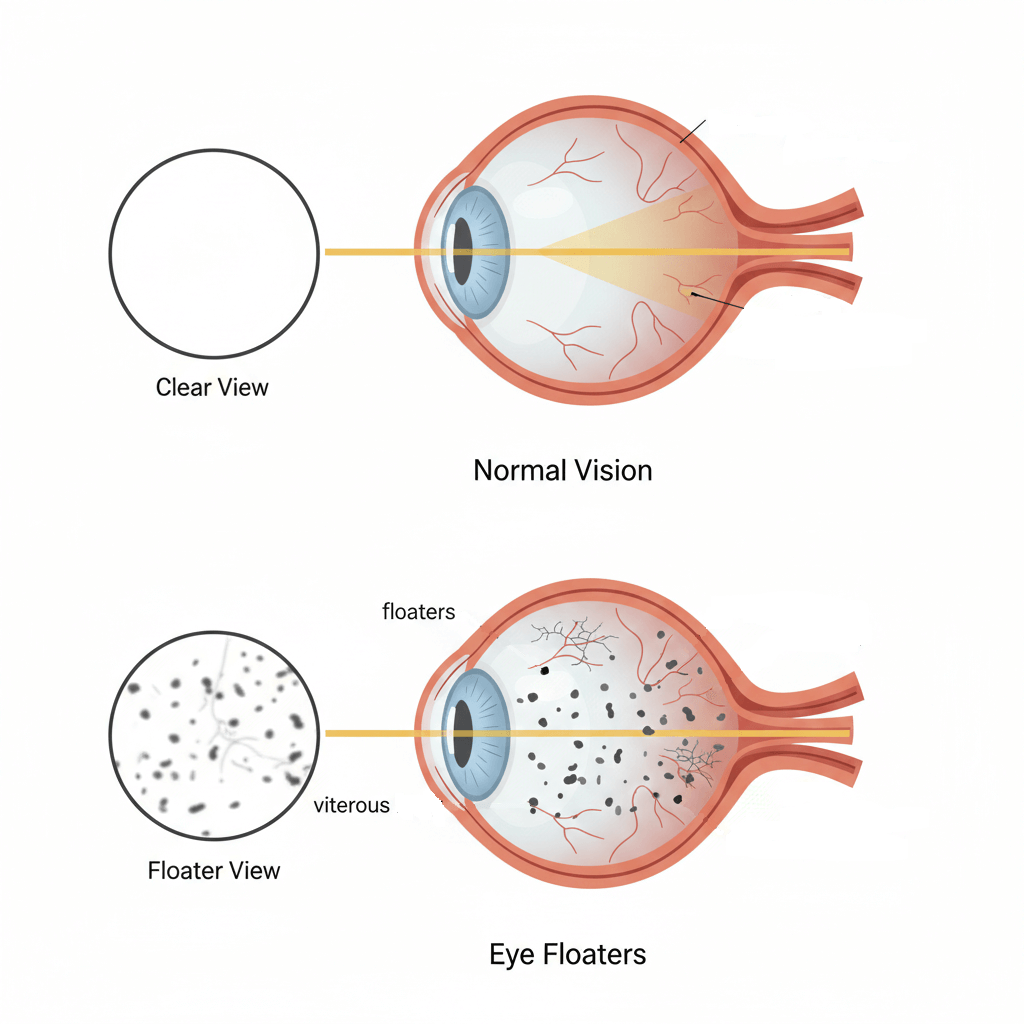
Have you ever looked at a clear sky and noticed tiny shapes dancing across your field of vision? You might try to blink away what looks like dirt and debris, only to find the specks follow your gaze. These are eye floaters. While often a harmless part of aging, understanding vitreous floaters is essential for long-term health. In this guide, our eye care professional team explains why these spots appear and when they signal a need for an eye exam.
What is an eye floater?
The eye’s interior is filled with a clear, gel-like substance called the vitreous humor (or vitreous gel). This vitreous fluid helps the eye maintain its shape and allows light to pass to the retina.1
When you are young, the vitreous is smooth. As we age, the collagen fibers within this gel clump together. What you see isn’t the fiber itself, but the shadow it casts on the retina. These clumps move within the liquid, giving them a distinct visual appearance: they “dart away” when you look at them directly.
Why do I have a dark spot in my vision?
A new dark shadow in your visual field is usually due to age-related vision changes. As the vitreous gel matures, it liquefies and shrinks.2
Posterior Vitreous Detachment (PVD)
A common cause of floaters is posterior vitreous detachment. This occurs when the shrinking vitreous pulls away from the optic nerve and the retina. It’s a normal age-related process and occurs approximately in 66% of people within the ages of 66 and 86.3 PVD is not a disease and usual symptoms are floaters and flashes. While vitreous detachment is a significant change for the elderly, it must be monitored to ensure it doesn’t lead to serious retina conditions.
Other Contributing Factors
- Myopia: Nearsighted eyes are longer, causing the vitreous to change earlier.
- Eye Trauma: Ocular trauma or injury can jostle the vitreous and create new floaters.
- Inflammation: Conditions like posterior uveitis (often an autoimmune condition) can flood the vitreous with cells.
- Diabetes: Diabetic retinopathy can cause blood vessels to leak into the eye.
- Surgery: Patients who have had cataract surgery or laser surgery may notice an increase in floaters.

How long does an eye floater last?
A more common question during an eye examination is: “When will these go away?” Unfortunately, most floaters in your eye are permanent clumps of protein. The good news is that over months, the brain undergoes “neuroadaptation,” learning to filter them out as background noise. They often sink to the bottom of the vitreous humor, moving out of your primary line of sight. In general, eye floaters can typically last for a few weeks to six months, with many settling to the bottom of the eye and becoming less noticeable or disappearing entirely. If you see constant or frequent floaters, it is highly recommended to visit your Optometrist.
Is it normal to have floaters in vision during pregnancy?
Yes and no. Hormonal shifts and high blood pressure can increase floaters during pregnancy. While often benign, sudden changes or cloudy vision can signal preeclampsia and require an immediate consultation with an eye care specialist.
Can floaters go away?
Technically, they rarely disappear, but they become less noticeable. If they cause significant vision loss or a persistent visual aura, medical interventions exist, though they are usually reserved for extreme cases.
Medical Options
Some specialists may offer laser treatment known as YAG laser vitreolysis. During YAG vitreolysis, a specialized laser surgery breaks up large floaters. In severe instances, a vitrectomy surgery (specifically a floaters only vitrectomy) replaces the vitreous with saline. Sometimes, silicone oil bubbles are used to hold the retina in place during healing. While laser floater removal and YAG laser procedures are options, they are not standard for minor floaters.4
How to reduce floaters in the eyes
There are a few things you can do to help your body reduce the floaters. Since the vitreous is mostly water, staying hydrated helps maintain vitreous fluid. To combat extended screen time, follow the 20-20-20 rule: look at something 20 feet away for 20 seconds every 20 minutes. Bright light makes shadows prominent. Sunglasses with high-quality coatings reduce glare and protect against sun damage and solar retinopathy.

Should I see an Eye Doctor about my eye floaters?
Most floaters are a nuisance, but some are a warning. Book a consultation with one of our eye care professionals immediately if you experience:
- A sudden “shower” of many new floaters.
- Frequent flashes of light (light flashes or flashing lights).
- A gray curtain or shadow is blocking your side vision.
These are signs of a retinal tear or detached retina. A retinal detachment is a medical emergency requiring laser therapy or surgery to prevent permanent loss.5
Can I use eyedrops for floaters?
There is no over-the-counter drop to dissolve floaters. Low-dose atropine may blur the shadow, but it isn’t a cure. You should talk to a professional to know more about what can actually help you with this condition.
How to prevent eye floaters
While you cannot completely stop the natural aging of the eyes, there are several proactive steps you can take to maintain the health of your vitreous fluid and overall vision.
- Prioritizing nutritional support is a great foundation; diets rich in omega-3 fatty acids, leafy greens, and citrus fruits provide the antioxidants and vitamins necessary to support the eye’s internal structures.
- Managing systemic health is vital, as controlling high blood pressure helps avoid complications like retinal vein occlusion, while regular monitoring for macular degeneration ensures long-term clarity.
- Protecting your eyes from physical harm is equally important, so always wear appropriate safety gear to prevent ocular trauma during high-risk activities.
- Finally, staying consistent with comprehensive eye examinations and routine check ups allows your eye care professional to detect rarer issues, such as asteroid hyalosis (calcium deposits in the eye) or an ocular migraine, before they impact your daily life.

Book an Eye Exam and Stay On Top of Your Eye Floaters
An eye dilation during a check-up is the only way to see the retina and optic nerve clearly. Don’t ignore vision changes and make mental notes with floaters as it could be a hint to visit your eye doctor. Book an eye exam with one of our optometrists today.
Sources:
- National Eye Institute (NIH): Floaters (2024). https://www.nei.nih.gov/eye-health-information/eye-conditions-and-diseases/floaters
- Mayo Clinic: Eye floaters – Symptoms and causes (2024). https://www.mayoclinic.org/diseases-conditions/eye-floaters/symptoms-causes/syc-20372346
- Cleveland Clinic: Posterior Vitreous Detachment (PVD) (2024).
https://my.clevelandclinic.org/health/diseases/14413-posterior-vitreous-detachment - American Society of Retina Specialists. Vitrectomy surgery. (2024). https://www.asrs.org/patients/retinal-diseases/34/vitrectomy
- American Academy of Ophthalmology (AAO): Detached Retina (2025)
https://www.aao.org/eye-health/diseases/detached-torn-retina