
Can wearing glasses make your eyes worse? Our Optometrists answer!
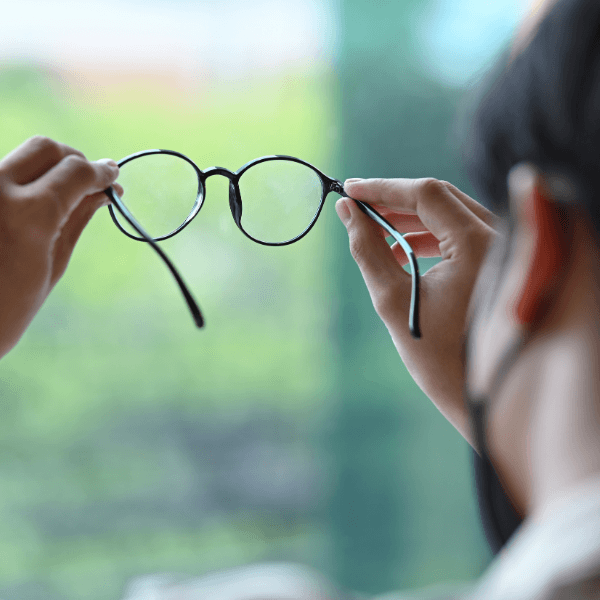
The misconception that wearing glasses causes the eyes to become lazy is a frequent concern shared by patients during a routine eye examination. Many individuals notice that their vision seems less clear when they remove their corrective eyewear compared to before they started wearing it, leading to the false conclusion that the lenses have weakened their visual system. In reality, while an eyeglass prescription may change over time due to biological factors, it is rarely the glasses themselves that cause a decline in visual acuity.¹ Briefly, while your prescription may change over time, it is rarely the glasses themselves causing the decline.
So, can wearing glasses make your eyes worse?
No, wearing glasses does not cause your eyes to become physically weaker or more dependent on correction. Eyeglasses are external optical aids that serve to redirect light so it focuses correctly on the retina; they do not alter the physical structure or the anatomy of the eye itself.² The perceived decline in vision often occurs because the brain becomes accustomed to the high-definition, clear images provided by the lenses. When the glasses are removed, the brain is suddenly forced to process blurred images again, making the contrast between corrected and uncorrected vision feel more significant than it did previously.
How vision actually works: The anatomy of focus
For an individual to experience clear vision, light entering the eye must land directly on the retina, which is the light-sensitive tissue at the back of the eye. This process is known as light focus. When the light does not land precisely on this point, it results in refractive errors. These errors are typically caused by the physical length of the eye or the specific curvature of the cornea.²
- Nearsightedness, or myopia, occurs when the eye is physically too long, or the cornea is too curved, causing light to focus in front of the retina rather than on it.²
- Farsightedness, or hyperopia, happens when the eye is too short, causing light to focus behind the retina.
- Astigmatism involves an irregular, almost football-like shape of the cornea, which prevents light from focusing on a single point.
- Presbyopia is the natural, age-related stiffening of the crystalline lens and the surrounding ciliary muscles losing efficiency inside the eye, which impacts the ability to focus on close objects.² Stars usually around age 40.
None of these structural or age-related conditions are caused by wearing glasses; they are inherent to the eye’s shape and the aging process.

Does wearing glasses make your eyes weaker?
The idea that glasses stop your eye muscles from working is a myth that lacks clinical evidence.¹ When an individual has uncorrected refractive errors, their ciliary muscles (the internal ocular muscles responsible for changing the shape of the lens) must work constantly to attempt to clear the blurred or unfocussed image. This persistent effort leads to significant eye strain, headaches, and physical fatigue.
By utilizing the correct lens strength, these muscles are finally allowed to relax. This state of relaxation is the natural, healthy function of the eye for distance vision.
For children, the stakes are even higher, as the visual system is still developing. An Optometrist will prescribe glasses to ensure the brain receives clear signals, which is vital for the proper development of the eye-brain connection.¹ Without this correction, a child may develop permanent visual deficits.
What happens if you wear glasses that are too strong?
While wearing an incorrect prescription will not cause permanent physiological damage, it can create significant temporary discomfort, if the lens strength is too high. This is a situation sometimes referred to as over-correction, where the visual system must work overtime to compensate for the displaced focal point.¹ This often results in severe headaches, a pulling sensation behind the eyes, and dizziness. Patients may also experience nausea or blurred vision as the ciliary muscles struggle to find a point of clarity through an inappropriate lens.
When are glasses not required?
Not every patient requires full-time vision correction. Individuals with very low prescriptions may find they only need assistance for specific visual needs, such as night driving or reading small text. Furthermore, Optometrists often distinguish between a true refractive error and temporary strain known as pseudo-myopia. This condition occurs when the internal muscles of the eye temporarily lock up after prolonged digital screen use or excessive screen time.³ In these instances, the solution may involve following the 20-20-20 rule or adjusting screen use habits rather than a permanent eyeglass prescription.
Does not wearing glasses worsen eyesight?
For adults, choosing not to wear glasses typically does not result in a physical change to the eyeglass prescription, but it does lead to chronic asthenopia. This includes symptoms such as squinting, eye strain, and tension headaches as the body tries to overcome the blur.
However, for children, failing to provide vision correction can have permanent consequences. If a child’s brain does not receive a clear image during the critical years of development, it may begin to ignore the signals from one or both eyes, leading to Amblyopia, commonly known as lazy eye.² In such cases, the loss of vision can become permanent and cannot be fully corrected later in life.

Why is my eyesight getting worse even with glasses?
It is common for patients to feel their vision is declining despite wearing their current glasses, but this is usually due to natural progression. Myopia often continues to progress throughout the teenage years and into early adulthood, regardless of whether glasses are worn.² Furthermore, once a patient reaches the age of 40, they will likely experience the onset of presbyopia, which necessitates reading glasses or progressive glasses to see near objects clearly. This is a biological milestone of the ocular system, not a failure of previous correction.
Modern environmental factors also play a role. Digital eye strain, often referred to as Computer Vision Syndrome, occurs because digital screens emit high-energy blue light and create glare that can make vision feel fuzzy or distorted.³ This discomfort is often misinterpreted by patients as a sign that their eyes are getting worse, when they are actually suffering from environmental fatigue.
How to maintain good vision with glasses
Maintaining optimal eye health requires a combination of high-quality lens technology and healthy habits. Choosing the right lens technology is essential for reducing the daily fatigue that users often mistake for a decline in vision. Kodak Lens Vision Centres provide advanced options which utilize blue-light-blocking lenses and anti-reflective coatings to filter harmful high energy light rays and reduce glare from digital screens and UV rays.
Proper fit is equally important. If frames are crooked or sit too low on the bridge of the nose, the optical center of the lens will not align with the pupil, causing unnecessary blur. Patients should also utilize a proper lens cleaner and microfiber cloth to keep their vision unobstructed. Incorporating lifestyle changes, such as consuming omega-3 fatty acids and practicing the 20-20-20 rule (looking at something 20 feet away for 20 seconds every 20 minutes), can significantly mitigate strain.³ Most importantly, attending an annual eye exam ensures that your Optometrist can monitor for conditions like dry eye or retinal problems before they impact your daily life.
When should I be worried about my vision changing?
While a gradual shift in your vision over a period of one or two years is a normal part of the aging process, sudden or dramatic changes are medical concerns that require immediate attention from an Optometrist or Ophthalmologist. These symptoms often point to underlying eye conditions rather than a simple change in refractive error.²
The Red Flag Checklist:
- Sudden Blur or Vision Loss: Rapid loss of clarity in one or both eyes is a medical emergency.
- Fixed Blind Spots: Dark spots in your central or peripheral vision that do not move are distinct from common floaters and require investigation.
- The Curtain Effect: A shadow or curtain moving across your field of vision can indicate retinal detachment.
- Double Vision (Diplopia): Seeing two images can be related to eye coordination issues or neurological concerns, especially if it persists when you cover one eye.
- Eye Pain or Redness: Severe aching accompanied by blurred vision can be a sign of Anterior Uveitis or high pressure related to Glaucoma.
- Straight Lines Looking Wavy: If straight edges appear kinked, it is a primary symptom of Age-related macular degeneration.
The role of routine exams
Early detection remains the most effective tool in preserving vision. Many serious eye diseases, such as Glaucoma or Diabetic Retinopathy, often present no symptoms in their initial stages.² A comprehensive eye examination at Kodak Lens Vision Centres allows an Optometrist to assess the internal health of the eye and the visual system far beyond what a basic vision screening can provide.
Once your clinical health is confirmed, ensuring you have an updated prescription with precision lens types (such as bifocal glasses or multifocal lenses) will eliminate the perceived worsening of vision caused by outdated correction.
If you suspect your vision is changing, our Optometrists at Kodak Lens Vision Centres provide comprehensive eye examinations across Toronto and the Greater Toronto Area. From updating your prescription to selecting the right pair of glasses for you, we ensure your visual system remains healthy. Visit our website today to book an appointment and experience the precision of professional vision care.
References:
- 2024, Does wearing glasses make your eyes weaker?, Mayo Clinic:https://www.mayoclinic.org
- 2025, Common causes of vision loss and refractive errors, American Academy of Ophthalmology:https://www.aao.org
- 2023, Digital eye strain and its impact on ocular health, National Eye Institute:https://www.nei.nih.gov