
Can you sleep in contacts? Risks, reality, and what to do if you do
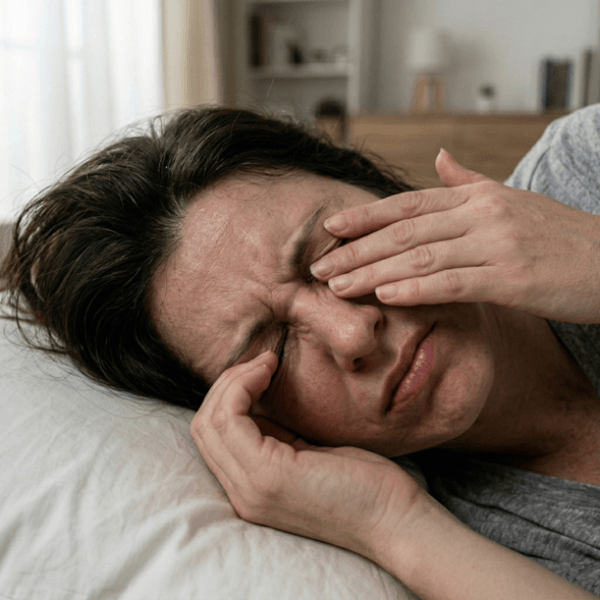
After a long day, the routine of removing contact lenses can feel daunting. Many patients question whether a full cleaning cycle is necessary when exhaustion sets in. While ignoring your visual correction seems harmless, the impact on your eye health is significant. Your cornea requires constant oxygen flow to maintain clarity. Wearing lenses during sleep creates a synthetic barrier, leading to complications like corneal damage, mild irritation, or permanent vision loss.
Can you take a nap wearing contact lenses?
For the vast majority of contact lens wearers, the answer is a firm no, as standard lenses are not designed to remain on the eye when the lids are closed. While a brief twenty-minute nap is less likely to cause a severe microbial eye infection than a full night of sleep, even short periods of closure cause the lens to tighten and dry out. This occurs because napping restricts the oxygen supply that the cornea requires to remain transparent and healthy. Eye health is heavily dependent on an open eye for maximum oxygen flow, and interrupting this process, even briefly, can lead to immediate discomfort and blurry vision upon waking. When the eyes are closed, the oxygen supply shifts from the atmosphere to the gelatinous fluid and blood vessels in the eyelids, which provides significantly less nourishment than an open environment.
What happens if you fall asleep with contact lenses in?
When you sleep in contacts, you subject your eyes to corneal hypoxia, a condition characterized by a severe lack of oxygen reaching the surface of the eye. Because the cornea does not have its own blood vessels, it relies on the atmosphere and the tear film for nutrients and oxygen. Closing your eyelid creates a barrier, and adding a contact lens creates a secondary barrier that can lead to corneal swelling or edema. This lack of breathability often feels like “sand in the eyes” sensation, where the lens suctions to the eye surface, creating a gritty texture and significant redness. Furthermore, a closed eyelid creates a warm, moist environment where bacteria can be trapped beneath the lens, drastically increasing the risk of a bacterial infection or conjunctivitis. This bacterial trap is one of the primary reasons an Optometrist will advise against any overnight use of traditional lenses.

Serious complications: Beyond irritation
The clinical risks of sleeping in contact lenses extend far beyond temporary discomfort or dry eyes. One of the primary concerns for an Optometrist is microbial keratitis, an inflammation of the cornea that can be incredibly painful and cause acute sensitivity to light. If left untreated, these infections can progress into corneal ulcers. These are open sores on the corneal surface that can result from severe bacterial infection, potentially leading to permanent scarring or vision loss.¹
In chronic cases of oxygen deprivation, the eye may attempt to compensate through corneal neovascularization. This is a process where the eye grows new, fragile blood vessels into the cornea to seek out oxygen. These vessels can eventually impair sight and make future contact lens wear difficult. Patients must also be wary of rarer but more aggressive threats such as Acanthamoeba Keratitis or Fungal Keratitis, which are often linked to improper handling of contacts or poor contact lens hygiene. The immune response triggered by these conditions can be intense, leading to long-term dry eye disease.
Are there contact lenses for sleeping?
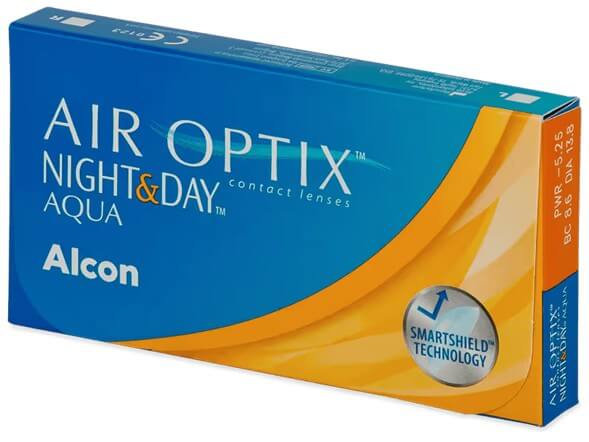
Yes, there are FDA-Approved Extended Wear Lenses specifically designed and materials-tested for safe overnight use. These extended-wear contact lenses are typically made of silicone hydrogel, a highly breathable material that allows significantly more oxygen flow to the cornea compared to traditional disposable soft contacts. For example, we offer the Air Optix Night & Day, which are designed for monthly replacement and can be worn for up to 30 nights of continuous wear, as directed by an eye care professional.
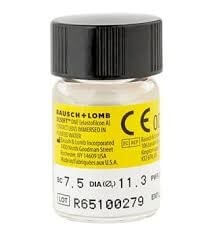
In more specialized cases, such as the treatment of aphakia, lenses like Silsoft are utilized. These are made of Elastofilcon A and are approved for overnight wear for up to 30 days, often used in pediatric or adult care where frequent lens removal is not feasible.
Another option is Orthokeratology, involving rigid gas-permeable lenses worn only at night to reshape the cornea so that the patient can enjoy clear vision during the day without any lenses. However, it is essential to remember that even extended wear contact lenses require a specific prescription and rigorous monitoring by an Optometrist at Kodak Lens Vision Centres to ensure the eye is responding well to the wear schedule.
Whether you use toric contacts or coloured, decorative and cosmetic contacts, you should never sleep in them unless they are explicitly labeled for that purpose. Although it is possible, we strongly advise against sleeping with contact lenses in.
Recovery plan: What to do if you wake up with contacts in
If you wake up and realize that you forgot contact lens removal, the first step is to avoid panicking or immediately pulling at the lens. Because the lens has likely dehydrated, it may be stuck to the corneal epithelium. Attempting to force it off can cause painful corneal abrasions. Instead, use preservative-free rewetting drops, artificial tear eye drops, or a sterile saline solution to rehydrate the eye. Wait several minutes until the lens begins to float naturally on the tear film before attempting handling contacts for removal.
Once the lenses are out, you must give your eyes a glasses break for at least 24 hours. This allows the cornea to re-oxygenate and any minor corneal swelling to subside. Use this time to properly clean your contact lens case with disinfecting solution or a peroxide solution and ensure your back up glasses are updated. This period of rest is crucial for the immune response to reset and for the tear film to stabilize.
Lifestyle tips for contact lens hygiene
- Maintaining a strict contact lens wear schedule is the best way to prevent a microbial eye infection.
- Always replace your contact lens container every three months and never top off old contact lens solution with new; always use fresh disinfecting solution as recommended by your Optician or Optometrist.
- If you find your eyes are tired at the end of the day, remember to blink frequently and practice the 20-20-20 rule to reduce digital eye strain, which can make lenses feel less dry and reduce the urge to close your eyes to entertain yourself with a quick nap. Visit us or your optometrist if you feel like dry eyes are a concern.
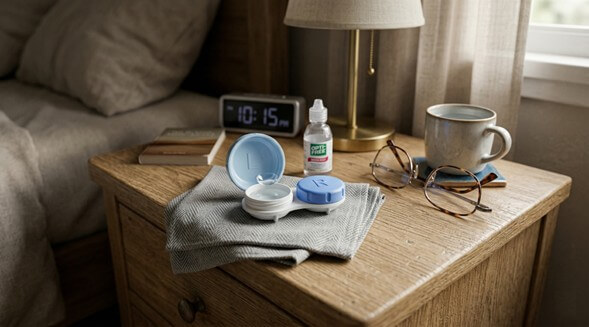
- Keeping a travel-ready kit is vital for those who spend long periods of time away from home. Ensure you have a small bottle of cleaning solution, a spare lens case, and your glasses in your bag. This makes it easier to prioritize lens cleaning even when you are exhausted.
- Proper contact lens hygiene also includes using a dedicated contact lens tweezer if recommended and ensuring your hands are free of lotions or oils before touching your eyes. Always wash your hands thoroughly before inserting or removing contact lenses.
When should I seek professional eye care?
While an accidental sleep in contacts happens to many, you should contact an Optometrist if you experience any red flag symptoms that persist after lens removal. These symptoms serve as an early warning for potentially serious eye conditions that require clinical intervention.² An eye doctor at Kodak Lens Vision Centres can perform a thorough contact lens exam to check for signs of a corneal infection or dry eyes.
Seek immediate medical attention if you notice:
- Blurry vision that does not clear with repeated blinking.
- Extreme eye pain or a persistent foreign body sensation.
- Unusual discharge or excessive crusting around the eyelids.
- Significant redness, especially if it is localized to only one eye.
Final Thoughts
Prioritizing your ocular safety involves recognizing that even minor symptoms can escalate into long-term complications. Organizations such as the American Academy of Ophthalmology and the Centers for Disease Control and Prevention emphasize that early diagnosis of bacterial keratitis is key to preventing permanent vision damage.³ To mitigate these risks, your Optometrist may suggest switching to daily disposable lenses, such as DAILIES TOTAL1, Acuvue Oasys Max, Ultra or MyDay, which eliminate the need for a contact lens case and significantly reduce the overall infection risk when worn properly.
Protecting your vision is a collaborative effort between you and your eye care professional; if you have concerns about your current visual correction or lifestyle habits, book a comprehensive assessment at your nearest Kodak Lens Vision Centre location today to ensure your eyes remain healthy, clear, and safe.
References
2024, Corneal Opacity and Scars, American Academy of Ophthalmology:https://www.aao.org/eye-health/diseases/corneal-opacity
2025, Contact Lens Care and Hygiene, Centers for Disease Control and Prevention:https://www.cdc.gov/contactlenses/care-hygiene.html
2023, What is Keratitis?, Mayo Clinic:https://www.mayoclinic.org/diseases-conditions/keratitis/symptoms-causes/syc-20374151